Stargazing Made Simple: A Beginner’s Guide to Astrophysics


Astrophysics may sound complex at first, yet it becomes exciting once you break it down into simple ideas. You already interact with the universe every day. You see sunlight, you feel gravity, and you watch the sky change from day to night. When you look at these things with curiosity, you take your first step toward understanding astrophysics. This field explores how the universe works, and it helps us learn why stars shine, how planets move, and what lies far beyond our solar system. With a calm and friendly approach, you can build a clear picture of the cosmos even if you have never studied science before.
What Astrophysics Really Means
Astrophysics explains the behavior of everything in the universe, from the smallest particle of light to the largest galaxy. Scientists ask simple questions. They want to know how stars form, why planets orbit, and how light travels across millions of miles. They build their answers through observation and math. While their tools might be complex, their goals are surprisingly easy to understand. They want to uncover the rules that guide the universe.
When you think of space, you might imagine extreme distances. Because nothing is close by, astronomers rely on light to learn about planets and stars. Light carries clues, and telescopes read those clues. With this information, scientists figure out what objects are made of and how hot they are. This process helps you see how vital curiosity is. You learn by paying attention to even the smallest detail.
How Gravity Shapes the Universe
Gravity guides almost everything in astrophysics. It holds planets in orbit, keeps stars together, and shapes galaxies. You already know gravity because you feel it pulling you toward the ground. Now imagine that same pull working between every object in the universe. Even tiny particles attract each other. When many particles gather, the pull becomes stronger. Eventually, large objects such as stars and planets form.
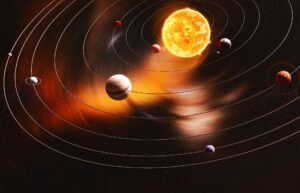
Think of the solar system. The Sun pulls every planet toward it, and each planet moves in a curved path as a result. This balance creates orbits. It may not look very easy, but the idea is simple. Things fall toward the strongest pull. Over time, this rule shapes the universe’s structure.
Light as a Cosmic Messenger
Light travels extremely fast, so it reaches us from distant places even after crossing space for years. When astronomers study light, they read a long story. Different colors and patterns reveal temperature, movement, and chemical makeup. You never need to memorize everything, but you should understand that light is a tool. It lets us study objects we will never touch or visit.
Imagine a star. You cannot travel to it, yet light from that star reaches your eyes. Because of this, you can learn what it is made of and how old it might be. Light keeps moving until something stops it, so it carries information no matter how far it goes.
Stars and Their Life Cycles
Stars begin with clouds of gas and dust. Gravity pulls these clouds together until they form hot and dense cores. When the temperature rises enough, nuclear reactions start. These reactions release light and heat, and the star begins to shine. You can think of it as a natural engine. The star stays bright as long as the reactions continue.
Eventually, the fuel runs out. When this happens, stars change shape. Small stars shrink into white dwarfs. Larger stars explode and become supernovae. Some form black holes. Each path shows how gravity and energy interact over time. By learning this, you understand why the night sky contains many different types of stars.
Planets and How They Form
Planets grow from leftover material around young stars. Dust and small rocks collide, stick together, and slowly build larger bodies. Over time, these bodies clear their paths and become planets. This process takes millions of years, yet it follows simple steps. Because the same rules apply everywhere, scientists can compare planets in our solar system to those in distant systems.
Earth formed this way, too. It cooled over time, gained an atmosphere, and developed conditions that support life. When you see how natural this process is, space feels less mysterious and more familiar.
Galaxies and the Structure of the Universe
Galaxies contain stars, planets, dust, and dark matter. They form patterns because gravity shapes their movement. Our galaxy, the Milky Way, holds hundreds of billions of stars. When you think about this number, you realize how large the universe truly is. Still, each galaxy follows the same physical rules. This makes astrophysics easier to understand because the same ideas repeat at larger scales.
Scientists study galaxy behavior to learn how the universe began and how it changes. Because galaxies move apart over time, we know the universe expands. This insight comes directly from studying light and gravity, two concepts you already know.
Simple Ways to Begin Your Own Exploration
You do not need advanced tools to enjoy astrophysics. Begin by observing the sky. Notice how stars appear brighter on clear nights. Track the Moon as it changes shape. Watch planets when they become visible. These small observations help you think like an astronomer. You start with simple questions, then you look for patterns.
Reading beginner guides, using phone apps that identify stars, and watching science videos can also help. Each resource adds new details, and the more you learn, the easier the ideas become to understand. Consistency matters more than speed.
Why Astrophysics Is Worth Exploring
Astrophysics helps you understand your place in the universe. As you learn, you gain perspective. You see how everything connects. You notice the beauty in simple things, and you appreciate the vastness of space. Because the field is constantly growing, discoveries often appear. This means you always have fresh ideas to explore.
Most beginners feel intimidated at first, yet the subject becomes comfortable with time. Once you see how simple the core ideas are, you feel more confident. You realize that curiosity drives the field, not complicated math. You begin to enjoy the adventure of learning.